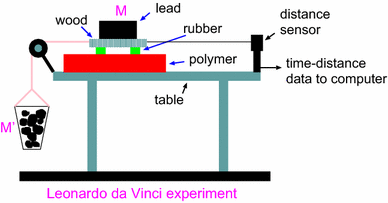
The frictional force can be expressed as.
Silicone rubber coefficient of friction.
The force it takes to initiate movement between the silicone rubber and a steel panel static cof was measured as well as the force needed to keep the silicone rubber moving against.
For example static friction can prevent an object from sliding down a sloped surface.
Compared to steel silicone rubber is 2 to 7 times greater.
μ static μ s or kinetic μ k frictional coefficient.
N normal force between the surfaces n lb there are at least two types of friction forces.
The texture can be used to reduce the co efficient of friction.
As medical device designers account for friction one solution is self lubricating liquid silicone rubber lsr which eliminates an extra step to apply lubrication.
Lower durometers have higher coefficients.
The friction force is the force exerted by a surface when an object moves across it or makes an effort to move across it.
Another solution is the use of a low cof silicone coating applied to the surface and then cured to chemically bond the coating to the substrate for a non tacky surface.
Values outside this range are rarer but teflon for example can have a coefficient as low as 0 04.
A liquid silicone rubber top coat can be used to improve surface friction of silicone elastomer parts.
F f frictional force n lb.
Rubber in contact with other surfaces can yield friction coefficients from 1 to 2.
The relatively high coefficient of friction of silicone elastomers can limit the range of applications of these materials.
Silicone is naturally quite tacky with a coefficient of friction of approximately 1 0 in many cases.
Steel is about 10.
Static friction is friction between two or more solid objects that are not moving relative to each other.
It can be applied using conventional coating methods.
Most dry materials in combination have friction coefficient values between 0 3 and 0 6.
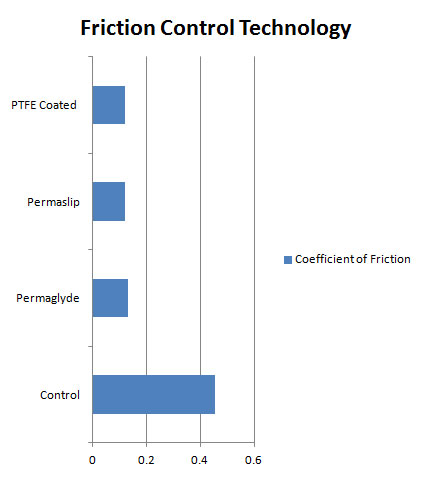
Nusil technology experts recently conducted a study to evaluate the static and kinetic coefficient of friction of coated versus non coated silicone surfaces.
On many of our products processes are applied to reduce the coefficient of friction.
The coefficient of static friction typically denoted as μ s is usually higher than the coefficient of kinetic friction.
These processes include applying a small amount of talc to the silicone surface and post curing the silicone in an oven for several hours.